
Sleep Apnea: More Than a Sleep Disorder
Obstructive Sleep Apnea (OSA) is a condition in which the airway repeatedly narrows or collapses during sleep, disrupting breathing and reducing oxygen levels. These events fragment sleep and place stress on nearly every system in the body.
While snoring is a common sign, sleep apnea is far more serious. When left untreated, OSA is associated with:
- High blood pressure and cardiovascular disease
- Insulin resistance and metabolic dysfunction
- Chronic inflammation and fatigue
- Cognitive, mood, and memory impairment
OSA affects both adults and children, and in many cases, jaw position and facial development play a critical role.
How the Jaw and Airway Are Connected
During sleep, the muscles that support the tongue and lower jaw relax. If the jaw is positioned too far back, unstable, or underdeveloped, the airway can become restricted.
This relationship between jaw structure, muscle balance, and airway size is a key reason sleep apnea often overlaps with jaw disorders (TMD), clenching, and grinding. Poor sleep worsens muscle tension and pain, while jaw instability further compromises breathing—creating a self-reinforcing cycle.
Pediatric Sleep Apnea and Facial Growth
As outlined in the recent medical and dental textbook by Dr. Joseph Yousefian, Pediatric Treatment of Sleep Apnea with Teledontics/Telegnathics link to book here, airway health in children is closely tied to facial growth and jaw development.
When breathing is impaired during critical growth years:
- Jaw and facial development can be altered
- Mouth breathing may become habitual
- The risk of adult sleep apnea increases
Early, airway-focused intervention can support healthier growth patterns and reduce the need for more invasive treatments later in life.
Clinical Evidence Supporting an Integrated Approach
Research led by Joseph Yousefian, published in the Journal of Dental Sleep Medicine (Vol. 12, No. 4, 2025), evaluated patients treated with a hybrid jaw-and-airway appliance.
Among 91 patients treated with ApnoDent®:
- 91% of mild-to-moderate OSA cases normalized breathing (AHI < 5)
- 77% of severe OSA cases showed significant improvement
- 95.5% experienced complete resolution of TMJ pain and muscle tension
- No adverse effects or bite changes were reported
These findings highlight the importance of treating the airway without sacrificing jaw health.
ApnoDent® and ApnoTX™: Treating the Airway While Protecting the Jaw
ApnoDent® and ApnoTX™ are patented hybrid oral appliances designed to address sleep apnea and jaw dysfunction at the same time.
This approach:
- Gently advances and stabilizes the jaw to keep the airway open
- Supports the temporomandibular joints and reduces muscle strain
- Decreases snoring and apnea events
- Helps prevent clenching, grinding, and tooth wear
- Can be used alongside braces or Invisalign® therapy
Unlike conventional devices that may strain the jaw, these appliances are engineered to restore balance across the airway, jaw, muscles, and bite.
Case Study
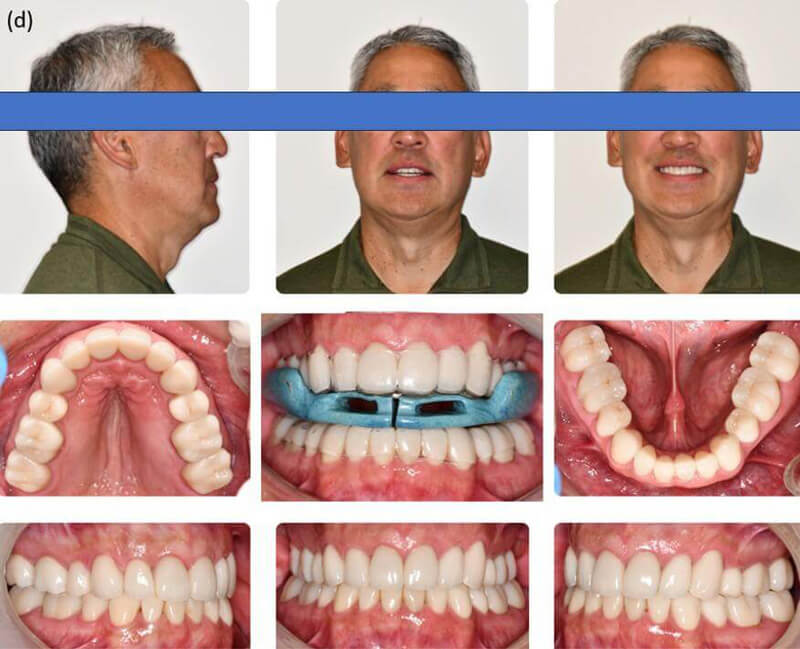
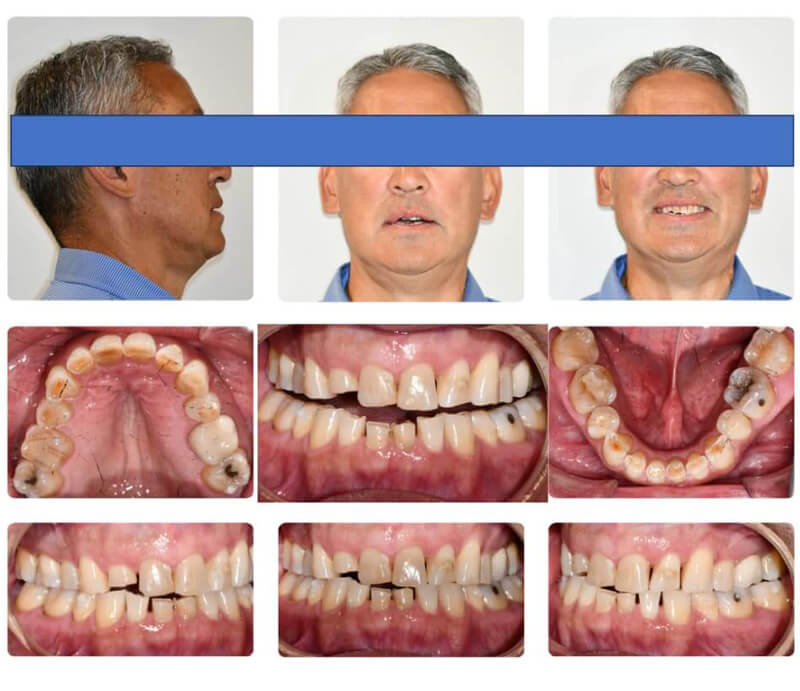
Initial
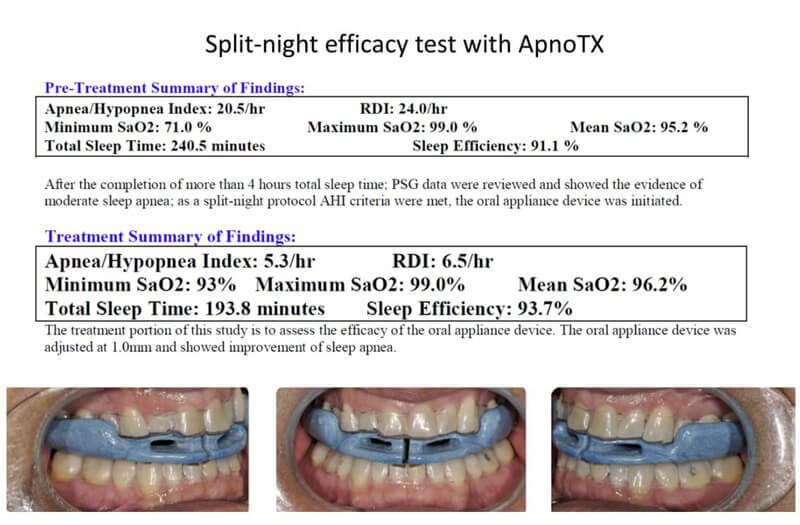
Pre- and post-treatment sleep study showing normalized AHI
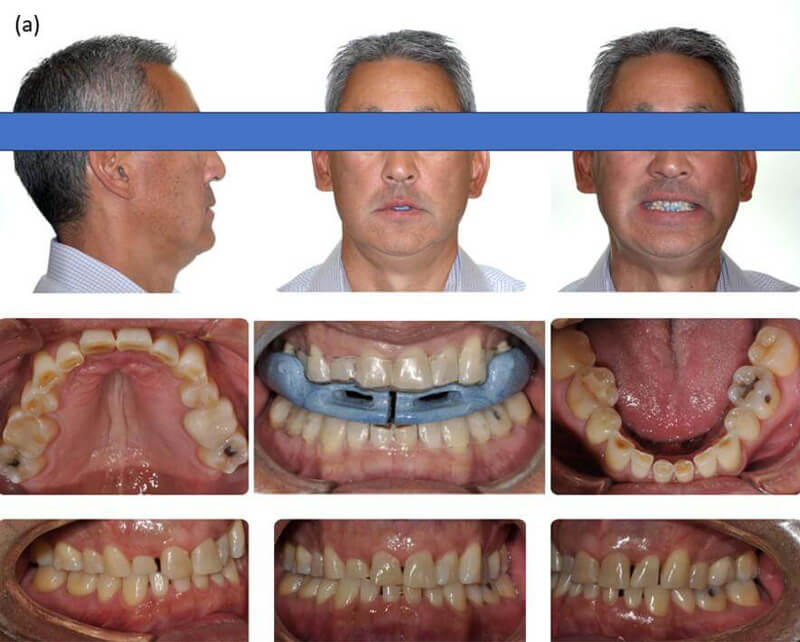
The original ApnoTX™ fits over the clear retainers
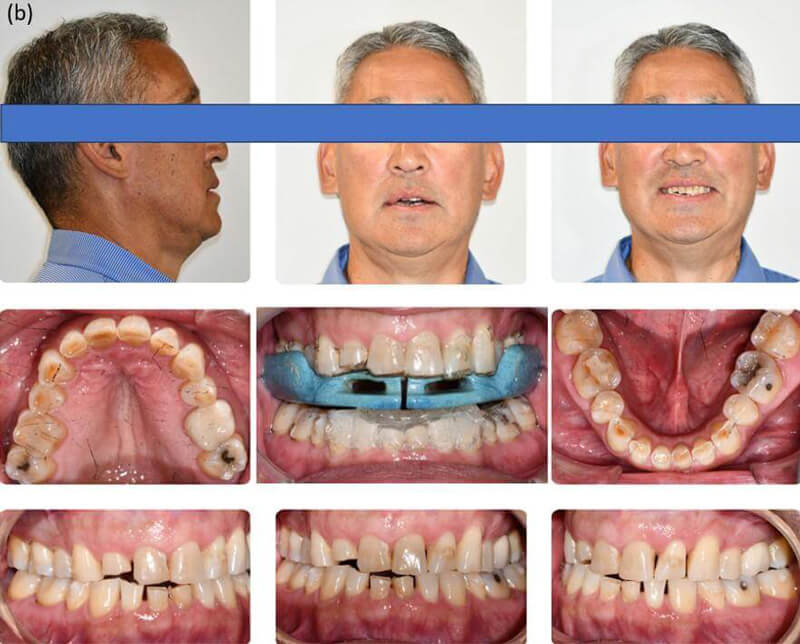
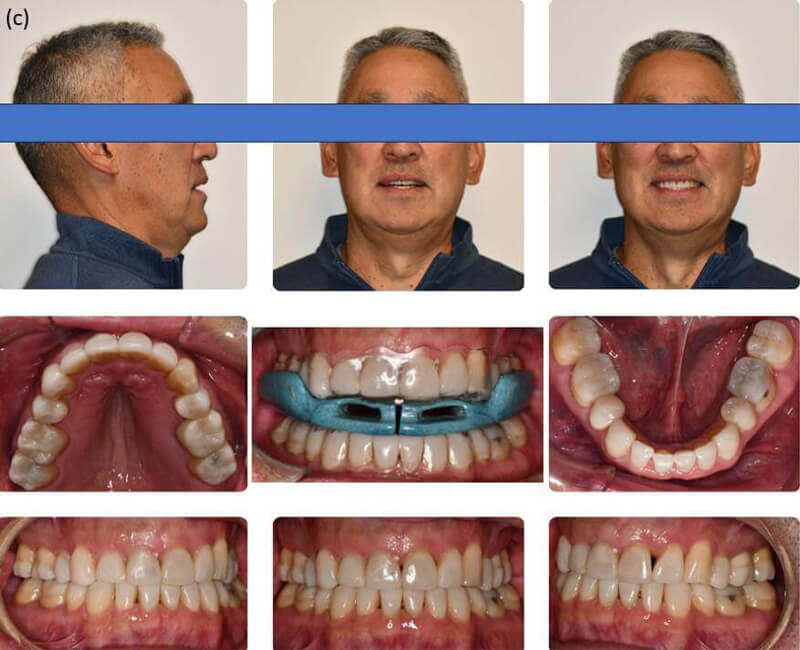
Integrated treatment of TMJ dysfunction and sleep apnea with ApnoDent®
(a) Initial intraoral and extraoral photographs showing the patient wearing the older design of ApnoTX™ with upper and lower clear retainers.
(b) Progression intraoral and extraoral photographs showing the teledontic widening of the dental arches, improvement of the dental crowding, and occlusion wearing the same ApnoTX™ over upper and lower Invisalign® aligners.
(c) Progress intraoral and extraoral photographs showing the post-teledontic stage, with provisional restorations and wearing the same ApnoTX™ appliance over upper and lower Vivera™ retainers.
(d) Post-teledontics, intraoral, and extraoral photographs show the final restorations wearing the same ApnoTX™ over upper and lower Vivera™ retainers.